Whether you store as an individual furniture, dishes, archives, IT equipment, or as a professional your stocks of goods, your POS material, materials or equipment related to your activity in a storage unit, insurance for the latter is part of risk-management obligations.
As with an apartment or a car, whether you are an individual or a professional, you must insure your belongings and cover all the items you will store — it is a legal obligation, whether the storage is short or long term.

What does self-storage insurance cover?
Self-storage insurance protects all the belongings you store in your storage unit based on their replacement value.
Although:
- Our secure centers are subject to regular and thorough checks both on the state of the electrical installations and on the proper working order of fire equipment (smoke detectors, extinguishers, etc.)
- All our units are ventilated,
- Our sites are equipped with video surveillance cameras that film and record 24/7
- All access is via our encrypted access technology on your smartphone application, which represents a very high level of security for you and your belongings, while guaranteeing easy access to your self-service style unit.
Zero risk does not exist.
Therefore, at Lockall, we offer our customers insurance adapted to our activity within our contracts to guarantee all your belongings on a multi-risk basis. Because despite everything our services put in place, if your self-storage were to be affected, your coverage will allow you to cover the stored belongings according to the policy you have chosen.
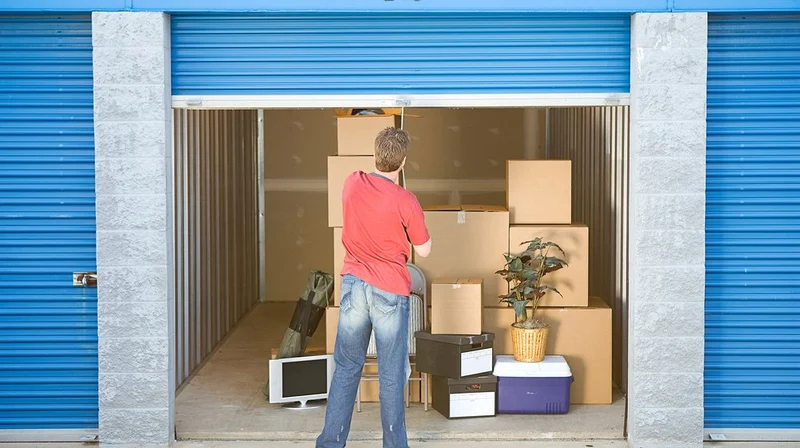
How to take out insurance for a self-storage space?
At Lockall, when booking your storage unit, beyond the choice of unit size, you will be able to opt for one of our insurance policies specially adapted to your needs and choose your insurance tier.
No further steps required — it will start and end automatically, on the same dates as your unit rental contract in our self-storage centers.
How much does storage unit insurance cost?
Self-storage insurance will depend on the value of the belongings you store in your unit.
It's the same principle as choosing a home insurance rate: the price depends on the value of the goods you have at home.
You will therefore have the choice of opting for different insurance coverages defined by value tiers (see our terms) to face the risks.
Feel free to ask our teams for advice to guide you toward the best solution.
What are the risks if I do not take out insurance for my storage?
Not taking out insurance for the storage of your belongings carries several risks:

Financial loss in the event of a claim
Without insurance, you could suffer significant financial losses in the event of damage or loss of your belongings. For example, in the event of fire, theft or water damage, you would be solely responsible for replacing or repairing the damaged items, which can represent a high cost.
Legal liability
If you store items for other people or for a company, you could be held liable in the event of damage or loss. Without insurance, you would be personally responsible for covering the costs related to these incidents, which could have serious financial consequences for you.
Putting your activity at risk
In the event of a major claim such as a fire or flood, and without insurance, you might not have the necessary funds to replace your lost or damaged belongings. This could lead to disruptions in your business activities or personal life, or even the closure of your business in the most serious cases.
Taking out insurance for the storage of your belongings therefore protects you financially against potential risks and gives you peace of mind in the event of a claim.

What items are not insurable in a storage unit?
There are several types of objects and prohibited products that should not be placed in a storage unit, and which therefore cannot be insured.
Flammable and dangerous items
Harmful and corrosive items are strictly prohibited, such as explosive, toxic or flammable products. These are extremely dangerous for the goods stored in surrounding units, for the storage center, and especially for the people who work there.
Butane gas, for example, resins, petroleum and paints are prohibited; matches and hydrogen are also not allowed.
Illegal and prohibited items
Of course, illegal items or fraudulent files must not be kept and therefore insured in a self-storage facility: drugs, items from a burglary or fencing are examples…
Likewise, it will be impossible to keep firearms or their ammunition in the storage unit. This rule remains valid even if the customer has a duly issued firearm permit.
Perishable and foul-smelling foodstuffs
For reasons of hygiene and health, to be placed in a self-storage facility, food must be in cans.
It is not permitted to keep perishable food that may rot and attract rodents and insects, making the space unsanitary and harming all the belongings stored in the unit and those nearby.
In the same vein, you cannot store foul-smelling products, household waste, or your compost bin…
Humans and animals
Sure, life in Paris is expensive, but living in a self-storage facility remains forbidden. Of course, you can come by our premises to check on your stored belongings.
It should also be emphasized that no animal, dead or alive, may be kept or domesticated in a storage location.
Plant products and green plants
Storing plant products such as green plants, shrubs and other similar items is forbidden. Moreover, it's important to know that a storage space is far from being an ideal conservation area for your plants.
Like perishable foodstuffs, the risk of rotting and contamination is real and not tolerable in a center with storage spaces of other people.