You prepare your main residence to rent it on Airbnb, do a house exchange or welcome travelers during the high season ? But… what to do with your personal objects, your memories, your archives, your important papers, or that old exercise bike that takes up half the hallway?
No question of piling everything into a cupboard or leaving your belongings lying around in front of complete strangers. It's time to put away and of preserve what matters, in all security.
This is where the temporary storage via a self storage box : a practical, flexible, secure and easy-to-implement solution. It allows you to free up your accommodation without sacrificing your privacy.
In this guide, we explain When, how And Why use a storage space in box rental as part of a seasonal rental, whether for the short term, or an extended period of several months.
Summary
Why rent a storage unit as part of a seasonal rental?

Whether you are an Airbnb host, house exchange globetrotter or owner of a second home, you inevitably have things that have no place in the cupboards during a rental.
Before a short-term rental (Airbnb, Booking, etc.)
In order to attract and welcome tourists, passing professionals or families of vacationers, the more your accommodation is clear, neutral and tidy, the more it will please.
When you welcome travelers for a few days or a few weeks, you must offer them a clean, clear space, without too personal objects.
Your worn out slippers, your invoice binders or your personal development books... are not going to help you get 5 stars.
During a house exchange or a stay abroad
You are going on an adventure abroad, or you are exchanging accommodation for a few weeks with another family via www.homeexchange.fr for example? Great. But what happens to your business in your absence?
Doing a house exchange is a wonderful human adventure. Even if exchanges are often based on trust, it is wiser to secure your personal belongings. So that everything goes well, it is necessary to set some discreet but clear limits. And this often involves shelter certain objects that do not concern your guests.
You don't want a stranger to touch your papers, your clothes or your family memories, right?
When renting your main residence.
When you are not there, you rent her so that she can live a little…and that you can reimburse the charges for your second home in which you are staying during this time
But you often leave a lot of things there that the tenants don't need. Between two personal stays, storage quickly becomes a headache. What should you do with your seasonal equipment, your personal linen or those items that you do not want to lend to tenants?
Examples:
- Sledding and après-ski in the middle of August?
- The barbecue and deckchairs in January?
- Your decorative boxes, party tableware or garden equipment?
The advantages
| ???? Need | ✅ Solution thanks to the box | ???? Concrete benefits |
| Free up space to improve the rental experience | You empty the furniture of personal and superfluous items before the guests arrive. | – A cleaner, more neutral, more harmonious interior. – Your ad photos gain clarity and appeal – Tenants feel more comfortable, like at home. |
| Safely store your personal belongings | You store objects that you care about or that are valuable outside your home. | -Less stress during rental. – Precious objects protected from breakage or theft – Things tidy and accessible when you need them. |
| Respect your privacy and preserve your memories | You remove intimate or sentimental items that you do not want to expose to strangers. | – You maintain control over your privacy. – You avoid awkwardness or intrusions. – You protect your family memories and unique objects. |
How to choose a temporary storage solution suitable for seasonal rental?
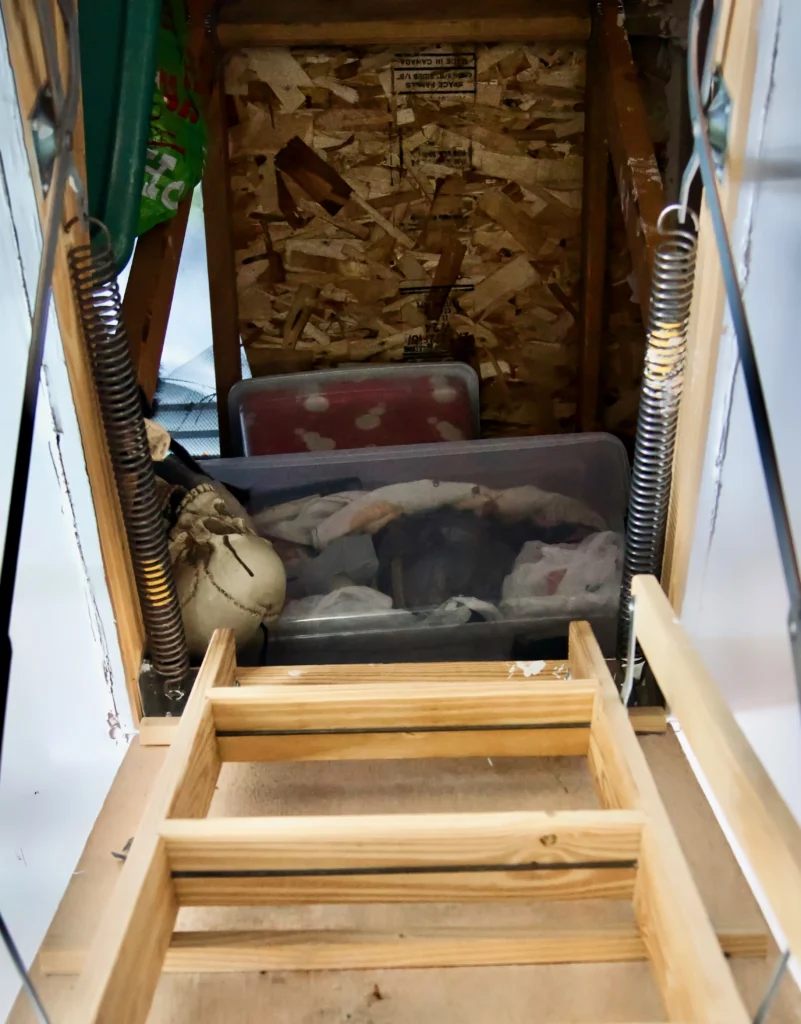
When you rent short-term accommodation, choose your accommodation wisely. storage solution is crucial. The right box can really simplify your business management and make the experience smoother.
Let’s take a look at the options and criteria you need to know!
Self-storage, storage or collaborative box?
There are several storage options, each with its advantages. To help you make the right choice, here are the key differences to keep in mind:
| Storage type | Access | Benefits | Disadvantages | Ideal for… |
| Self-storage (individual box) | Free access, often 24/7, with code or badge | – Total autonomy – Unlimited access – Permanent control over your assets | – Slightly more expensive depending on location | Those who travel back and forth frequently Need for regular access |
| Traditional storage | Limited access Fixed hours, by appointment | – Very secure – Management by staff | – Lack of flexibility – Less accessible | Long-term storage without the need for regular access |
| Collaborative box between individuals | Owner-defined access Often restricted | – Reduced cost – Proximity possible | – Variable security – Sometimes restrictive access | Small budgets One-off, non-sensitive storage |
In summary: For a seasonal rental where you often need to access your belongings (for example between two stays), the self-storage is usually the best option. It combines security, flexibility, and autonomy.
What criteria should you take into account to choose well?
To find the perfect box, here are the essential points to check:
- Close : the more box is close to your accommodation, the more practical it will be to drop off or pick up your belongings quickly.
- Secure : cameras, alarm, access control, surveillance… You have to feel confident.
- Flexible : possibility of renting for a short period (from 1 to a few months), with easy renewal or termination.
- Adapted : neither too small (to avoid having to stock twice), nor too large (to avoid paying unnecessarily).
- Accessible : Essential if you manage several rentals or trips, to access your goods at any time.
- Clear and transparent prices : Beware of hidden fees or billing beyond the expected duration.
A simple checklist before signing can avoid many disappointments!
What size box should you plan for?
This is often the question that gets in the way: “Which space should I rent to store everything without wasting?” »
Here are some benchmarks:
- Studio / T1 (20-30 m²) : a box of 1 to 2 m² is generally sufficient for boxes and personal effects.
- Apartment T2-T3 (40-60 m²) : allow for 5 m², especially if you also store furniture or seasonal equipment.
- House (more than 80 m²) : a box of 10 m² or more may be necessary, depending on the quantity of objects (bikes, garden furniture, sports equipment, etc.).
To help you better visualize, many self-storage sites offer online simulators. You enter the type and quantity of items to store, and you get an accurate estimate of the size needed. Super practical to avoid paying too much or too little!
Practical organization: what to store and how in the short term?
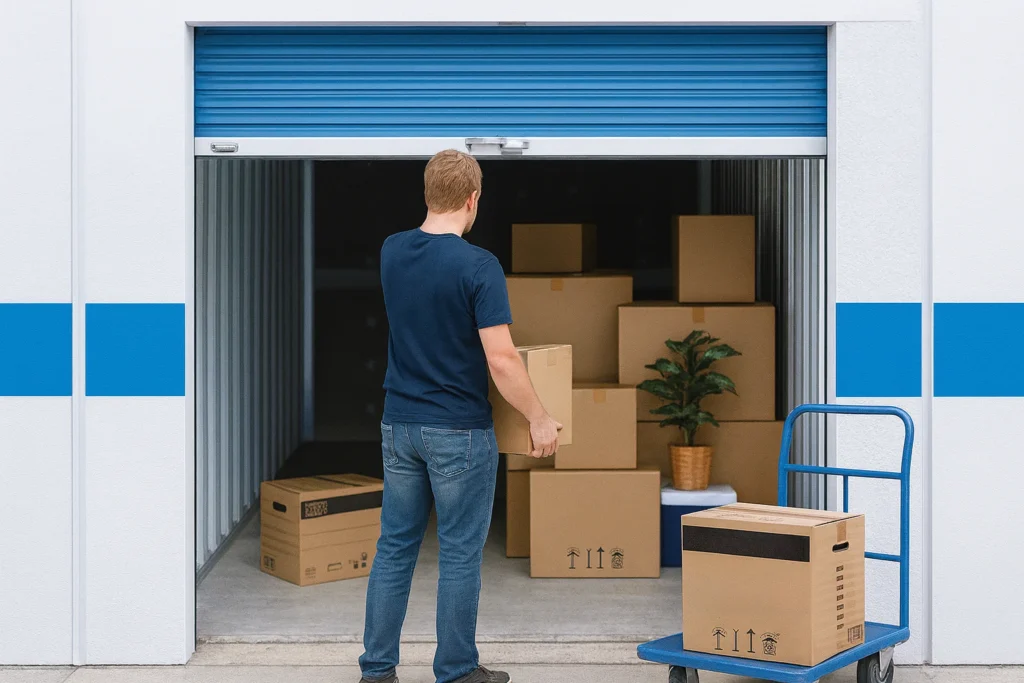
Before renting your accommodation on Airbnb or another short-term platform, good sorting and efficient storage are essential.
It’s not just about emptying the cupboards: it’s also about protect your personal belongings, optimize storage space And avoid classic mistakes which can cost you time or damaged items.
What items should be stored before travelers arrive?
When preparing your primary residence to accommodate vacationers, it is essential to remove items that are too personal or sensitive. Here are the main categories of items to store in a secure self-storage space:
- Personal items : souvenirs, family photos, costume jewelry…
- Important documents : identity papers, invoices, contracts…
- Fragile decorations : glass frames, ceramics, vases…
- High-tech equipment : computer, printer, external hard drive, etc.
- Sports equipment : exercise bike, dumbbells, yoga mats, etc.
- Off-season clothing : winter jackets in summer, suitcases…
How to properly organize your belongings in a storage unit?
The efficiency of your storage relies on good method of organization, especially if the storage duration is uncertain (a few days, an extended period or between two rentals).
Here are the best practices to adopt:
- Packaging by category : Group similar objects (for example, all documents together).
- Use sturdy cardboard standard size, easier to stack.
- Protect fragile items with bubble wrap, blankets or linen.
- Keep an inventory written or digital of each box.
- Label clearly each box with its contents and its original part (VERY useful to avoid reopening everything in order to find a single object...).
- Plan a central aisle for easy access to the boxes in the back.
- Use Height of the box: stack the heavy boxes at the bottom, the light ones on top.
- Put useful short-term items within easy reach.
Case studies and feedback

You might think that temporary storage is a matter of boxes and square meters.
But behind each seasonal rental there is a real story: that of a Parisian who frees up his apartment for tourists, a family on a trip, or a mountain lover who prefers the summits to the dust of the attic.
Here are three concrete cases experienced by our customers:
Airbnb in Paris: store your belongings 1 month per year
Camille, a freelance graphic designer, lives in a bright 40 m² apartment in the 11th arrondissement of Paris. Every season, she trades her screens for flip-flops, and her apartment for Airbnb to delighted tourists. Except… what to do with his collection of notebooks, his iPad Pro, his bike and his collection of 43 Russian dolls?
The solution:
She rents a small self-storage unit 2 m² in inner Paris, just enough for his precious belongings, his electric bike, and his (few) objects.
“Every year, I rent my apartment for €80 per night during my vacation. My box costs me €100/month. Result: on average €2,000 earned, zero stress, and I find all my items intact when I return”
House exchange: what do we do with personal matters?
Antoine and Céline had decided to take a big trip with their two children for 2 months. Their house in Paris? Rented via a house exchange with other globetrotters. But they had no desire for their guests to come face to face with their photo albums, their lingerie or Léo's Playmobil collection.
The solution:
They emptied 2 bedrooms + office and rented a 6 m² box in a storage center. Everything was carefully labeled, packaged, listed (Céline had even done an inventory on Excel).
“We left with a light mind. Our hosts enjoyed a bright and pleasant house, and we recovered our belongings intact after our trip... except for a vase, which Antoine broke when taking it out of the box..."
Rented main residence: storing your belongings
Jacques, a retired Parisian, owns a chalet in the Alps in which he likes to stay several weeks a year. He rents out his Parisian accommodation during his stays. But there is no question of leaving his memories and the precious objects of his apartment available to strangers.
The solution:
He opted for a complementary solution: a self-storage box located in an artisanal area 15 minutes’ drive away. He stores everything he really wants to preserve there.
“I even got into the habit of renting a smaller box between two stays to store my skiing and hiking equipment. This way, I have more space in my apartment, and I can move my belongings easily from one unit to another in the storage center."
Preparing your home for seasonal rental should not come at the expense of your comfort, your privacy or your memories. Thanks to self-storage, you maintain control over what matters, while offering your tenants a welcoming, clear and tidy space.
Whether for a few days or several months, renting a storage unit means:
- Lighten your home without stress
- Protect your personal belongings
- Gain serenity and organization
And now ? All you have to do is pack your boxes, choose the size of your box, and fully enjoy your next seasonal rental with peace of mind!