With the suspension of MaPrimeRénov’, this guide details the panorama of aid for energy renovation in 2025, the types of eligible work, the beneficiaries concerned, and the steps to follow to benefit from the aid schemes.
Summary
Understand the context: why is MaPrimeRénov’ suspended in 2025?
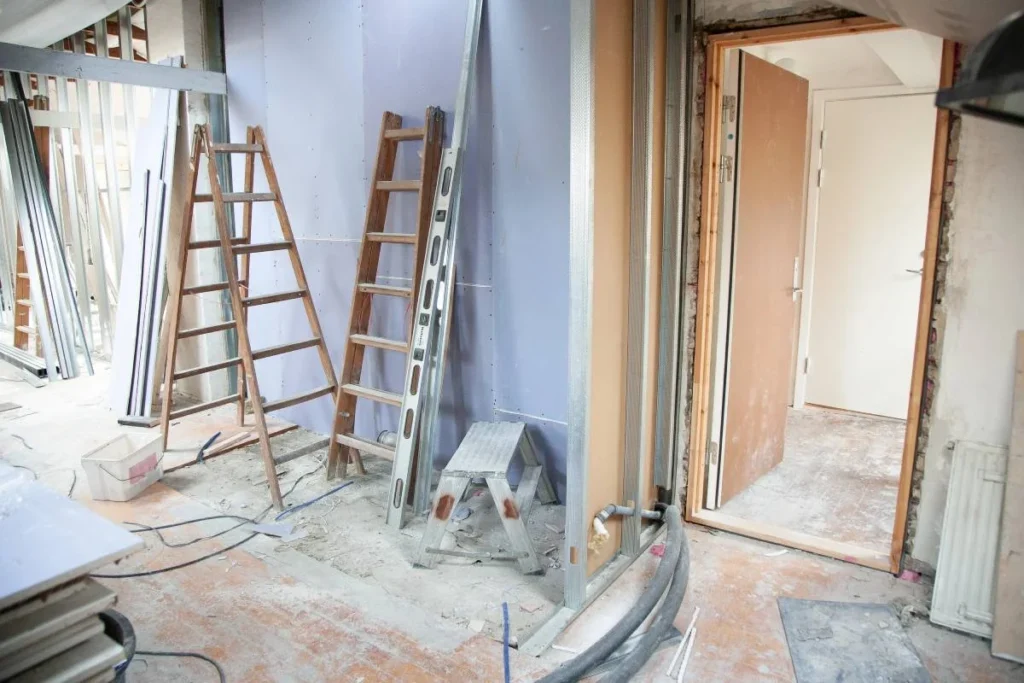
Announced at the beginning of June 2025, the temporary suspension of MaPrimeRénov’ created a shock wave in the energy renovation sector. A reminder of the history:
- 2020 : Creation of MaPrimeRénov’, merger of CITE and Anah aid.
- 2021 : Extension to landlords and co-ownerships.
- 2022 : Increase in ceilings, reinforced support for overall renovation.
- 2023 : Launch of the accompanied journey with “Mon Accompagnateur Rénov’”.
- 2024 : 1.7 million homes assisted, budget increased to €4.5 billion.
- 2025 (January-May) : record number of applications submitted, budget overrun.
- June 2025 : Announcement of the temporary suspension from MaPrimeRénov’.
- September 15, 2025 : reopening planned
Why is MaPrimeRénov’ suspended?
This decision results from a tight budgetary context, ofadministrative adjustments necessary, and a political recalibration of the national housing renovation strategy.
A major budget overrun
Initially with a budget of 5 billion euros for the year 2025, MaPrimeRénov’ experienced a record influx of applications in the first half. In less than six months, more than 70% of the annual envelope had already been consumed.
Large-scale renovations, now favored, mobilize much higher amounts per file, which has accelerated the exhaustion of credits.
A need for reorganization of processing services
As a result, the “MonProjetRénov’” portal, which centralizes requests, is facing a administrative bottleneck : sharply increased processing times, unprocessed pending files, payment delays.
Anah (National Housing Agency), pilot of the system, justified the suspension by the need to absorb the stock and stabilize the platform.
A desire to redefine political priorities
The government wishes to refocus efforts on overall renovations accompanied and on the poorest households.
The MaPrimeRénov’ summer break would allow reprogramming of funds, a impact assessment of the first months, and a overhaul of eligibility criteria with a view to a new start in the fall of 2025.
How long is MaPrimeRénov’ suspended?
The suspension of MaPrimeRénov’ comes into force on June 23, 2025 and concerns exclusively new filings, with the exception of simple renovations (single works). This interruption is subject to a progressive recovery schedule announced by the public authorities, scheduled for September 15.
A two-month interruption for major renovations
Projects submitted before July remain valid and will be processed according to the conditions in effect on their date of submission. Of June 23 to September 15, 2025, THE news requests relating to major works are frozen.
A reopening announced from September 15, 2025
According to Anah and the Ministry of Ecological Transition, the reopening of the system is planned from September 15, with a new unified route around efficient renovation, a recalibration of scales, and a reinforced mandatory support.
Renovation aid calendar (summer 2025) :
| Help name | Status between July and September 2025 | Remarks |
|---|---|---|
| MaPrimeRénov’ by gesture (single-work or single-action) | Maintained | |
| MaPrimeRénov’ major renovation | Suspended | Reopening planned from September 15, 2025 |
| MaPrimeRénov’ Co-ownership | Partially maintained | End of financing for gas boilers |
| MaPrimeAdapt’ | Maintained | Assistance in adapting housing for the elderly or people with disabilities |
| Eco-PTZ (zero interest loan) | Maintained | Can be combined with MaPrimeRénov’ large-scale renovation |
| Local/regional aid | Varies depending on the community | Some are suspended, others maintained |
| CEE (Energy Savings Certificates) | Maintained | Energy bonuses issued by suppliers |
What consequences for the beneficiaries?

The suspension of MaPrimeRénov’ from June 23, 2025 has several significant practical consequences for owner-occupiers, landlords, co-ownerships And accompanists.
Not everyone is affected in the same way depending on the progress of their project.
For files already submitted before July 1, 2025
THE complete applications and submitted before June 23, 2025 are taken into account and will be educated normally, according to the scales in effect at the time of filing.
Beneficiaries can continue their work respecting the conditions specified in their financing agreement. It is therefore not no need to redeposit a request or to wait until September if the file is already in progress.
For projects currently being created
Households who have not yet finalized their file will not be able to submit their request before reopening, unless the project concerns a single-job renovation, who remains eligible.
It is strongly recommended to prepare the file now to be ready to file as soon as we resume in September. also take advantage of this time to plan the storage of your belongings during the renovation work.
For pending or incomplete requests
The files incomplete or not validated before June 30 will not be not treated and must be represented after the recovery, potentially with new eligibility or calculation conditions.
Attention : quotes signed before suspension do not guarantee eligibility for financial assistance upon reopening. It will be necessary to check whether the criteria have not changed (downwards) for the cost/expenditure ratio.
Energy renovation aid still available in 2025

Devices that remain active in 2025
Despite the temporary suspension of MaPrimeRénov’, several aid for energy renovation remain accessible in 2025. These devices allow individuals to continue their projects without interruption, under conditions.
This aid is provided by different actors: State, local authorities, banks, energy suppliers, etc.
| Help name | Type of work covered | Amount or method | Eligibility conditions | Where to apply? |
|---|---|---|---|---|
| Zero-rate eco-loan (eco-PTZ) | Insulation, heating, ventilation, overall renovation | Until 50 000 €, repayable without interest over 15 to 20 years | Main residence built >2 years ago | Partner bank after quote |
| Energy Savings Certificates (EEC) | Insulation, boiler, heat pump, etc. | Variable amount depending on work, income and business | All households, with immediate discount voucher or bonus | Energy supplier or craftsman |
| Aid from local authorities | Various work: insulation, equipment, DPE, audits, etc. | Very variable amount (often cumulative) | Conditions specific to each region, department or municipality | Website of your town hall/region |
| MaPrimeAdapt’ | Adaptation of housing to loss of autonomy | Until 22 000 € | Elderly or disabled people subject to means testing | Via Anah |
| Reduced rate VAT (5.5%) | All energy renovation work | Automatic reduction on invoice | Housing over 2 years old, carried out by pro RGE | Applied by the craftsman |
| Temporary property tax exemption | Major renovations (energy gain) | 50 to 100% depending on municipality | Old accommodation, renovated, according to local conditions | Tax Center |
| MaPrimeDecent Housing | Rehabilitation of unsanitary or substandard housing | Up to 80% of the cost of the work | Sanitation, electricity, ventilation, insulation work carried out by owners or lessors | Via Anah |
Modifications of alternative devices to MaPrimeRenov’
- MaPrimeAdapt’ becomes a central lever for aging at home.
- MaPrimeDecent Housing East extent to more areas and simplified.
- THE green loans at subsidized rates, supported by the State and the EIB, are more accessible and include a accompanied route.
- Some Enhanced EECs were maintained to temporarily compensate for the suspension of MaPrimeRénov’ aid.
Eligible renovation projects: what is still funded in 2025

Despite the temporary suspension of MaPrimeRénov’, many work to renovate and improve housing remain financeable in 2025 via other mechanisms (eco-PTZ, CEE, MaPrimeAdapt’, local aid, etc.).
Work still subsidized in 2025 (depending on the system mobilized)
| Category of work | Eligible works in 2025 | Possible devices |
|---|---|---|
| Thermal insulation | – Insulation of unused attics – Insulation of slopes – Insulation of walls from the outside or inside – Insulation of low floors | Eco-PTZ, CEE, local aid |
| Heating and hot water production | – Replacement of oil/gas boiler with heat pump – Thermodynamic water heater – Biomass boiler – Connection to a heat network | CEE, Eco-PTZ, local aid |
| Ventilation and air quality | – Installation of single or double flow VMC – Smoke extraction or indoor air sanitation work | Eco-PTZ, MaPrimeLogementDecent |
| Housing adaptation | – Walk-in showers with grab bars – Level access – Widening doors, reinforced lighting | MaPrimeAdapt’, help Anah |
| Health and safety | – Repair of the electrical installation – Rehabilitation of faulty ventilation – Correction of structural humidity | MaPrimeDecent Housing, Anah |
| Overall renovation | – Combination of at least 3 work actions for significant energy savings (DPE label) | Eco-PTZ, regional aid, green loans |
| Renewable energies | – Installation of thermal solar panels – Wood or pellet heating – Hybrid heat pumps | CEE, Eco-PTZ, local aid |
Good to know :
- THE EEC and the eco-loans remain accessible without income conditions.
- Some local communities offer temporary bonuses or increases to compensate for the suspension.
- The accompanied route remains mandatory for overall renovations (via Mon Accompagnateur Rénov’).
The two energy renovation paths in 2025: scale vs action
The year 2025 marks a strong refocusing of public policies around two very distinct paths energy renovation: the major renovation (accompanied) and the renovation by gesture (partial). Each meets different objectives, with specific aid and conditions.
The extensive renovation course (accompanied course)
The extensive renovation aims to significant energy gain, at least two classes on the DPE, and is based on a global and planned approach, supervised by a Renov’ guide approved by the State.
This is the obligatory route for very energy-intensive housing, which is suspended from June 23 to September 15.
Goals :
- Significantly reduce energy consumption
- Process thermal strainers (labels F or G)
- Valuing the property in the long term
Main criteria:
- Creation of a preliminary energy audit
- Gain minimum of 2 energy classes
- Work managed with the help of a Renov’ guide
- Possible eligibility for a reinforced financing (up to 90% for low-income households via MaPrimeRénov’ after relaunch)
The 6 stages of the accompanied journey:
- Initial diagnosis (DPE or energy audit)
- Planning the work with a Rénov’ Accompanist
- Financial arrangement and aid file
- Carrying out work by RGE companies
- Performance monitoring
- Payment of aid
The route by gesture (partial renovation)
The renovation by gesture concerns the targeted work, often carried out gradually, without requiring a complete course.
This model remains accessible via certain aids even during the suspension of MaPrimeRénov’.
Examples of eligible actions:
- Insulation of attics, floors or walls
- Window replacement
- Installation of a heat pump
- Implementation of efficient ventilation
How much can you get?
Example 1:
- Insulation of exterior walls + double flow VMC
- Gain: 1 energy class
- Estimated amount: €5,000 to €8,000 via CEE + local aid
Example 2:
- Air/water heat pump + attic insulation
- Gain: 2 energy classes
- Estimated amount: up to €12,000 cumulative (CEE + eco-PTZ)
Profiles eligible for energy renovation aid in 2025

Eligibility for renovation aid depends on several criteria: income, occupancy status (owner occupant, lessor, etc.), and type of accommodation.
In 2025, despite the temporary suspension of MaPrimeRénov’, several schemes remain accessible depending on the household profile.
Income brackets & accessible aid (2025 scales)
| ANAH profiles | Reference tax income (IDF) | Reference tax income (excluding IDF) | Accessible devices |
| Blue (very modest) | ≤ €23,541 / person. | ≤ €20,966 / person. | Maprimeadapt’, MaPrimeLogementDecent, CEE, eco-PTZ |
| Yellow (modest) | ≤ €28,657 / person. | ≤ €26,170 / person. | Same + accompanied route |
| Purple (intermediates) | ≤ €38,184 / person. | ≤ €35,233 / person. | CEE aid, green loan, local aid |
| Pink (well-off) | > €38,184 / person. | > €35,233 / person. | Little direct aid, except CEE or private financing |
Income for a single person, to be adjusted according to household composition.
Types of eligible housing
Eligibility also depends on characteristics of the property you own.
| Criterion | Minimum condition |
| Type of accommodation | Individual house or apartment in main residence |
| Use | Main residence (occupied at least 8 months/year) |
| Seniority | Housing completed since over 15 years old (or 2 years for certain devices) |
| Energy performance | Sometimes conditioned (e.g. temporary exclusion of F&G strainers in certain cases) |
| Eligible works | Made by RGE companies (professional) only |
Use the official simulator Simul’Aides de France Rénov’ to know your rights.
Special cases: rentals, furnished tourist accommodation, co-ownerships
Long-term rentals (lessors)
- Eligible for certain aid provided they rent the property as a main residence for a moderate rent.
- Rental commitment of 6 years minimum.
Furnished tourist accommodation & Airbnb
- Excluded of the main public aid (MaPrimeRénov’, Anah), because they are not considered as main residences.
- Can, however, benefit from aid via CEE, under strict conditions.
Condominiums
- Eligible works via MaPrimeRénov’ Co-ownership, especially for common areas.
- Requires a global audit, a/an minimum participation rate, and a qualified majority in AG.
Table of aid by type of accommodation
| Type of accommodation | Accessible aid |
|---|---|
| Main residence (owner) | All aid (depending on income): MaPrimeRénov’, CEE, eco-PTZ, local aid |
| Rental accommodation (long term) | MaPrimeRénov’ lessor, CEE, under conditions (commitment, capped rents) |
| Furnished tourist accommodation (Airbnb, etc.) | Not eligible for public aid (except in exceptional cases via CEE) |
| Co-ownership (common areas) | MaPrimeRénov’ Co-ownership, CEE, local aid, on condition of energy gain |
While waiting for the reopening of MaPrimeRénov’ in the fall of 2025, it is essential for project leaders to prepare their file well, to find out about the updated criteria and to anticipate the use of the supported pathway to maximize their chances of obtaining appropriate support.
This transition period must be seen as an opportunity to strengthen the quality and efficiency of renovations, for the benefit of energy savings, housing comfort and the reduction of greenhouse gas emissions.
In short, if the context evolves, aid for energy renovation remains a essential lever to finance and build more sustainable and responsible housing in 2025 and beyond.
Stay informed, mobilize the mechanisms still accessible, and prepare your projects to fully benefit from the new guidelines (and related rules) as soon as they are implemented.