In 2025, international moving remains a logistical and financial challenge, impacted by several global developments.
Between rising transport costs, new customs regulations and economic fluctuations, anticipating your budget is essential.
Many transport providers will offer you at least a free quote, or better, a simulator, to estimate the price of your international move.
The main criterion being the volume (if we put aside air transport where it will be the weight), this is what you will need to determine as precisely as possible via:
- The use of online volume calculators. These tools allow you to obtain a quick estimate of the volume and/or cost of your move, but they are for information only and must be validated by a professional quote.
- A/An detailed inventory of your property.
- The technical visit from a professional.
To compare the different options, you can go to this page.
Do not hesitate to request quotes from several international moving companies to compare prices and services offered, but also to check insurance and guarantees.
Summary
How to calculate the price of an international move?
This is THE essential question when going abroad. But it is far from simple: type of transport? Steps to follow? Specific service needs? Volume to transport? Distance to travel? The total cost will necessarily be impacted.
The average cost of an international move
The cost of an international move varies considerably depending on several criteria: the volume of goods transported, the destination and the services included. Before requesting a quote, it is always good to have an overall estimate.
Here is a summary table of the average costs of an international move depending on the volume transported and the destination:
| Volume (m³) | Europe (€) | North America (€) | Asia / Oceania (€) | Africa (€) |
| 5 – 10 | 1 500 – 3 000 | 3 000 – 5 000 | 3 500 – 6 000 | 2 500 – 5 000 |
| 10 – 20 | 2 500 – 5 000 | 5 000 – 7 000 | 6 000 – 9 000 | 4 000 – 7 000 |
| 20 – 30 | 4 000 – 7 000 | 7,000 – 10,000 | 8 000 – 12 000 | 6 000 – 9 000 |
Among the elements to take into account to calculate the price of your international move, the volume of goods to be transported is essential. The price varies depending on the volume and weight of your furniture and objects to be moved.
🌍 International moving simulator
The (often) hidden costs of an international move
Administrative and customs fees
- Some countries impose high taxes on the importation of personal goods.
- Customs clearance fees may be added if the moving company does not include them in the quote.
Mandatory documents and certifications
- Certified translations of transport documents.
- Specific certificates depending on the country (e.g. import permit, declaration of value, etc.).
- Visas and residence permits impacting moving logistics.
✅ Trick : Check with the embassy of the destination country for mandatory administrative fees

Costs related to the mode of transport
- Quotes are often based on an estimate. If the final volume exceeds this estimate, you will pay a supplement per m³.
- In the event of an increase in the price of fuel, a surcharge may be applied after signing the contract.
- Mooring, parking or storage fees may be charged extra.
Additional costs for loading and delivery
- A supplement is applied if the truck cannot park near the accommodation.
- If access requires a furniture lift, this may generate additional costs.
- If your accommodation is not available upon arrival, your belongings will be stored with daily fees.
Insurance and guarantees
- Standard insurance often covers a minimum value per kg, well below the real value of the objects.
- In case of breakage or loss, you may have to pay a significant deductible.
Additional services often billed
- Some service providers do not take care of packing/unpacking at no additional cost.
- Of the material costs (specific boxes, covers, air bubbles) can be added.
- The disassembly/reassembly of furniture is charged extra when one might think that it is included.
How to avoid these hidden fees?
✔ Request a detailed quote including ALL additional costs.
✔ Compare multiple quotes and ask specific questions about additional fees.
✔ Anticipate customs formalities to avoid last minute administrative costs.
✔ Allow for a slightly larger volume at your estimate to avoid surprises.
✔ Take out suitable insurance to avoid costs in the event of a disaster.

Which mode of transport should you choose for your international move?
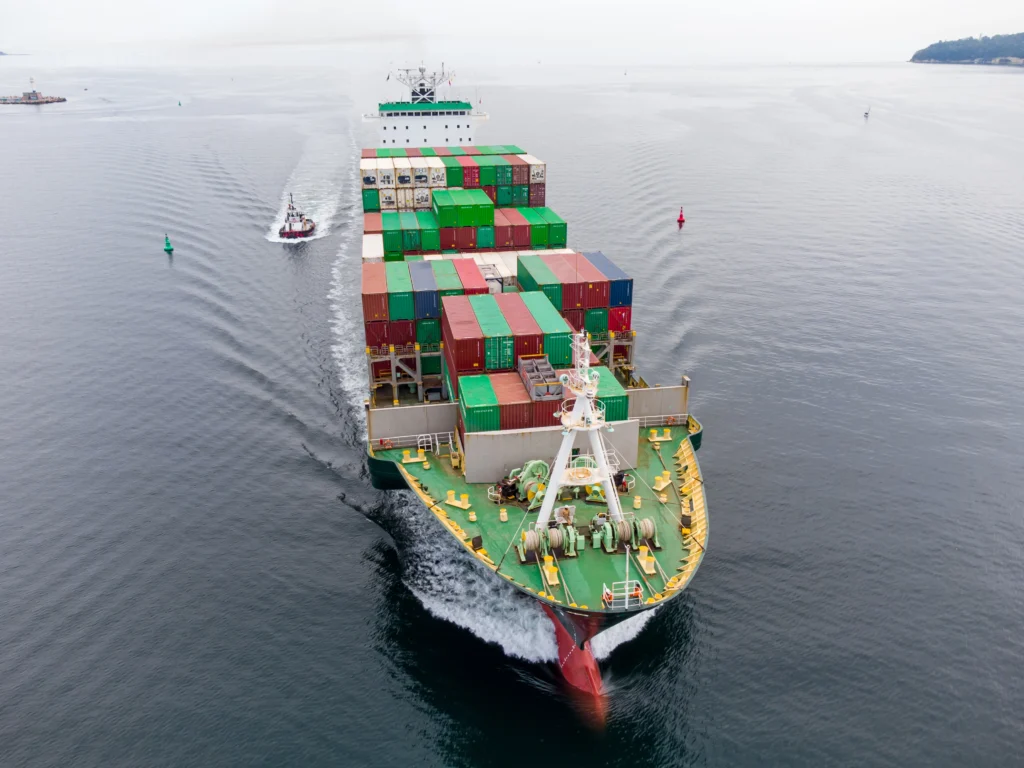
Moving via sea transport
Shipping is the most common option for an international move due to its relatively low cost, especially for large volumes.
A container of 20 feet (approximately 33 m³) will cost between 5,000 and 10,000 € depending on the destination, a container of 40 feet (approximately 66 m³) will cost between 8,000 and 15,000 €.
❌ Disadvantages:
- Long transit time, which can last from 3 to 8 weeks depending on the destination.
- Complex customs formalities requiring good anticipation.
- Additional costs possible for temporary storage or final home delivery.
Estimated cost depending on volume and destination:
| Volume (m³) | Europe (€) | North America (€) | Asia / Oceania (€) | Africa (€) |
| 5 - 10 | 1 000 - 2 500 | 2 500 - 4 000 | 3 000 - 5 000 | 2 000 - 4 000 |
| 10 - 20 | 2 000 - 4 500 | 4 000 - 6 500 | 5 500 - 8 000 | 3 500 - 6 500 |
| 20 - 30 | 3 500 - 6 500 | 6 500 - 9 500 | 7 500 - 10 500 | 5 500 - 8 500 |
| +30 | 5 000+ | 9 500+ | 10 500+ | 7 500+ |
Savings opportunities:
- Shared container (LCL) : Ideal for small volumes, but slower and with handling costs.
- Roll-on/Roll-off (RoRo) : Economical solution for shipping a vehicle with personal belongings.
Moving by air
Air transport is the quickest solution for an international move, but also the most expensive.
It is generally used for urgent shipments, valuable items or very small volumes. In fact, the invoicing is based on volumetric weight, which can increase the bill...
❌ Disadvantages:
- Limited access : Not all destinations are served directly.
- Price per kg or volume : The price depends on the weight and volume, with an average cost of 3 to 10 €/kg.
- Taxes and surcharges : Surcharges for fuel, handling and customs.
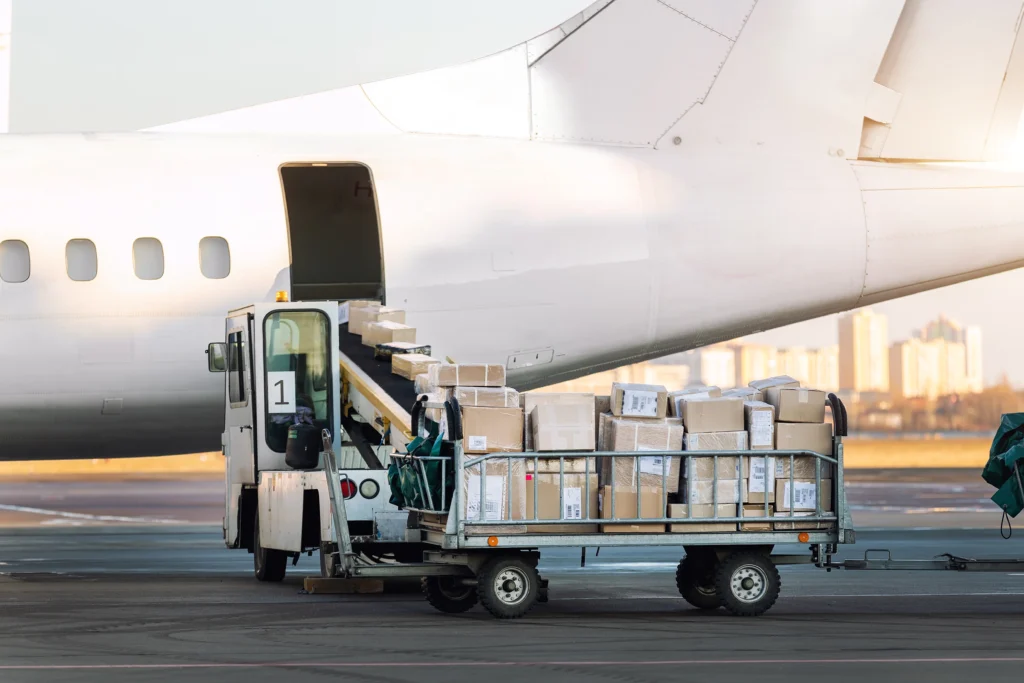
Estimated cost based on weight and destination by air:
| Weight (kg) | Europe (€) | North America (€) | Asia / Oceania (€) | Africa (€) |
| 50 - 100 | 500 - 1 500 | 1 000 - 2 500 | 1 500 - 3 500 | 1 000 - 3 000 |
| 100 - 200 | 1 500 - 3 500 | 2 500 - 5 500 | 3 500 - 7 000 | 2 500 - 6 000 |
| 200 - 500 | 3 500 - 7 500 | 5 500 - 12 000 | 7 000 - 15 000 | 6 000 - 14 000 |
When to use it?
✅ Urgent move for professional reasons (with costs covered by the employer).
✅ Sending valuable or fragile items (documents, electronic equipment).
✅ Supplement to maritime transport for essential business.

Moving by land transport (Europe)
This is the solution most often chosen for medium-distance moves. Beyond traditional road transport, rail transport has also developed and provides an alternative that is not only economical but above all ecological.
Train transportation : more economical and ecological for long distances, but additional logistics and the limitation of certain types of goods (for example, bulky furniture) can complicate the option.
Transport by truck : ideal for flexibility, proximity, and for heavy or bulky objects. This is the preferred choice for short to medium distance moves, especially if direct access to the destination is important.
Here is a comparative table between these two modes of transport:
| Criterion | Transport by truck | Train transportation |
| Average cost | 500 to 3000 € (depending on distance, volume, and services) | 300 to 1500 € (depending on distance and volume) |
| Distance | Suitable for local or medium distances | Ideal for long distances between large cities |
| Flexibility | Very flexible (door-to-door, flexible hours) | Less flexible (fixed hours, not always door-to-door) |
| Load capacity | Limited by the size of the truck, but more suitable for bulky objects | Suitable for large quantities, but limitations on the size of objects |
| Transit time | Depends on traffic and road conditions | More predictable, but can be slower depending on schedules and stops |
| Accessibility | Accessible everywhere, including rural areas | May not serve some rural areas |
| Ecology | Less ecological (high CO2 emissions) | More ecological (less pollution, especially over long distances) |
| Additional fees | Tolls, fuel, parking, labor | Additional logistics for the last leg of the journey, sometimes handling costs |
| Property security | Less secure in poor traffic conditions | More secure, fewer accidents in general, but requires good packaging for train jolts |
| Suitable for | Local moves, medium distances, heavy or bulky objects | Long distance moves, numerous but less bulky loads |
| Planning time | Requires flexible planning, especially if logistics are complex | More rigid planning according to train timetables |
In summary, which mode of transport for whom and what?
| Mode of transportation | Ideal for | Recommended volume | Average time | Cost |
|---|---|---|---|---|
| 🚢 Maritime | Moving outside Europe with a lot of furniture | 10 to 60+ m³ | 3 to 8 weeks | ⭐ Low to medium |
| ✈️ Air | Urgent moves or sending essential personal effects | Up to 2 m³ (or a few hundred kg) | 2 to 7 days | ⭐⭐⭐⭐⭐ Very high |
| 🚛 Road | Moving in Europe with door-to-door delivery | 5 to 50 m³ | 2 to 10 days | ⭐⭐ Average |
| 🚆 Rail | Long distances in Europe with a more ecological approach | Intermediate to large volumes | 5 to 15 days | ⭐ Low to medium |
Are you leaving Europe with all your accommodation? → 🚢 Shipping
Do you need to receive your belongings quickly? → ✈️ Air transport
Are you moving to a European country? → 🚛 Road transport
Do you favor more ecological and economical transport in Europe? → 🚆 Rail transport
How to reduce the costs of an international move?
5 tips for saving on your international move
Reducing the costs of an international move may seem complex, but by applying a few strategic tips, it is possible to optimize expenses. Here are practical tips for saving money on this type of move:
Reduction in transported volume
The cost of moving often depends on the volume of goods to be transported. The fewer items you have to move, the less you will pay. Before starting the process, it is wise to carefully sort through your belongings:
- Sell or donate unwanted items.
- Consider storing certain goods instead of transporting them if you don't need them immediately, in a storage box For example.
- Pack yourself to limit costs associated with professional packaging.
Optimization of the choice of transport
The mode of transport (plane, boat, train, truck) has a strong impact on the price of an international move. Each method has its advantages and disadvantages in terms of cost and time.

Anticipation and flexibility of dates
The more you anticipate your move, the more likely you are to benefit from advantageous rates. Moving companies often offer discounts if you book in advance, and you can take advantage of discounts offered by companies during off-peak periods (outside peak season).
Use of maritime groupage
If you have a volume of goods less than an entire container, opt for the maritime groupage, also called shared container (LCL) . This allows you to share a container with other customers and only pay for the space you use. The maritime mode is certainly slower, but remains more economical.
Comparison of offers and competition
Don't settle for the first offer. It is essential to compare prices from several moving companies to find the best deal.
Request several detailed quotes, taking into account the services included (packaging, insurance, etc.) and do not hesitate to negotiate prices, especially if you have several competitive proposals. Competitive bidding may result in discounts or free additional services. As such, look at customer reviews, you still sometimes have to be wary of offers that are too tempting.
Administrative and logistical formalities for international
Moving abroad requires careful preparation of administrative and logistical formalities.
Here is an overview of the main steps to take, the necessary documents, and information relating to insurance for an international move.

Documents needed for moving abroad
Here is a list of key documents you will need to prepare before moving.
| Category | Necessary documents |
| Visa and work permit | Work visa or residential visa (depending on the host country), work permit if applicable. |
| Property inventory | Detailed list of goods to be transported (furniture, objects, etc.), estimated value, condition, inventory signed by an approved agent. |
| Passport and identity card | Valid passport, identity card (if applicable for EU). |
| Customs documents | Customs declaration, proof of tax exemptions (if applicable), proof of residence or immigration documents. |
| Certificate of non-criminality | Criminal record extract or certificate of non-criminality (depending on the host country). |
| Health insurance and EHIC | European health insurance card for the EU, international health insurance for other countries. |
| Banking and tax documents | Bank statements, proof of funds, income tax return or tax receipts to prove creditworthiness and financial resources. |
| Driving license and vehicle | International driving license, vehicle registration documents, insurance and formalities related to vehicle registration in the host country. |
Take out international moving insurance
International moving insurance is essential to protect your goods during transport. It helps cover the risks of damage, loss, or theft during the journey, while providing peace of mind.
| Type of insurance | Description | Cost |
| Transport insurance | Covers goods during transport (sea, air, road). Includes basic or comprehensive coverage. | 1% to 3% of the value of the property to be insured. |
| Home Insurance | Covers goods from origin to destination, including packaging, transportation and arrival. | Varies depending on volume and value of goods. |
| Additional costs | Special insurance for high-value items (jewelry, works of art, fragile items). | Additional, depending on the property insured. |
Attention, some exclusions are possible, such as acts of war, natural disasters, and certain types of damage (e.g. precious items without special coverage). Check the exclusions in the contract carefully.
Finally ready for your move abroad?
An international move can quickly become a complex and expensive project.
Whether for professional, family or personal reasons, the costs associated with moving abroad are often much higher than for a local move.
Between transport costs, administrative formalities, insurance and various logistics services, it is essential to prepare your budget well to avoid unpleasant surprises.
Armed with our advice, you now have what it takes to succeed in this project!