Moving your offices is not a simple logistical task: it is a strategic decision which involves the entire company. New location, new lease, new organization : each stage of this relocation is an opportunity to rethink the workspace, improve collaboration between employees, and boost productivity.
But be careful: without careful planning, this transfer can quickly become a nightmare. Contracts to terminate, furniture to pack, teams to inform, suppliers to coordinate, work to launch, IT equipment to secure… Every day counts. And every oversight can be costly.
This guide supports you, step by step, to guarantee an office move successful, from the choice of new premises to the installation of equipment. Don't leave anything to chance. This complex project can become a real opportunity for your company — provided you follow the right method.
Key takeaways: the 5 most common mistakes
- Do not plan for a temporary storage solution.
- Underestimating the time required.
- Forget about lease-related delays.
- Do not anticipate the data transfer.
- Neglecting access and parking.
Steps for a successful office move

1. Before the move: frame, plan, anticipate
A business move cannot be improvised. Before even thinking about boxes or transferring furniture, it is essential to lay the foundations of a structured project. This first phase determines the success of the entire process: careful planning will help you avoid delays, additional costs and unnecessary stress for your teams.
Create a dedicated project team
A successful move is based on rigorous project management. Designate an internal team (or a project manager) responsible for overall coordination: service providers, communication, budget, planning monitoring, etc.
- Assign responsibilities according to a RACI table ;
- Organize regular meetings to monitor progress;
- Involve representatives from each department to anticipate specific needs (IT, HR, administrative, etc.).
Moreover, iinvolve employees upstream promotes support and limits resistance to change.
Analyze needs and write specifications
Each company has its specificities: number of employees, type of activity, IT equipment, storage space, accessibility conditions or even confidentiality issues. Before looking for new premises or signing a lease, it is crucial to analyze in detail the needs of your business.
- What surface for offices? For meeting rooms? For common areas?
- What services must be accessible on site (fiber, parking, catering, security, etc.)?
- What geographical imperatives (proximity to transport, customers, suppliers)?
« Formalize these elements in specifications. This document will serve as a reference throughout the moving project and during visits to the premises.. »
Evaluate your moving budget
An office transfer generates direct and indirect costs : professional mover, insurance, fitting-out work, purchase of furniture, termination of subscriptions or contracts, administrative costs, etc. Without forgetting the impacts on productivity if activity is slowed down.
Consider integrating :
- The costs of terminating the current lease (notice, inventory, repair);
- Quotes for transport companies and IT service providers;
- Expenses linked to the new layout (design, furniture, decoration);
- Hidden costs: non-productive days, demobilization of teams, resubscription to certain services.
Some moving sites may offer a professional moving cost simulator to obtain a realistic estimate.
Create a realistic schedule of operations
Each step of the move must be planned over time: from the search for future offices to the final installation, including administrative formalities and communication. A retro-planning clear allows you to remain in control of the project, coordinate actions and meet deadlines.
Include:
- Contractual deadlines (notice, signing of the lease);
- Work and delivery times;
- The transfer period (ideally outside peaks of activity);
- Internal checkpoints.
Moving in stages? Store your belongings temporarily.
New offices not yet ready → Store furniture and equipment while waiting for installation.
Gradual relocation → Gradually vacate the old premises.
Travaux ou aménagement → Protégez le mobilier, les archives et le matériel pendant la transition.
Discover the Lockall professional storage solutions
Simplified retro-planning for office relocation
| Week before moving | Key tasks | Responsible |
|---|---|---|
| 12 weeks | Constitution of the project team and distribution of tasks | Project manager |
| 11 weeks | Analysis of needs and drafting of specifications | Project team |
| 10 weeks | Search and visit to new premises | Real estate manager |
| 9 weeks | Budget evaluation, request for quotes from movers | Project team |
| 7 weeks | Logistics planning (transport, materials, packaging) | Project manager |
| 6 weeks | Negotiation and signing of the lease | Management / Legal |
| 5 weeks | Communication to employees and suppliers | Communications manager |
| 4 weeks | Sorting and packaging non-essential equipment | All employees |
| 3 weeks | Coordination with IT service providers and movers | IT/Logistics Manager |
| 2 weeks | Checking access and parking | Project manager |
| 1 week | Final preparation, checklist, computer tests | Project team |
| D-Day | Moving and settling into new premises | Project team + movers |
2. Research and validation of new premises
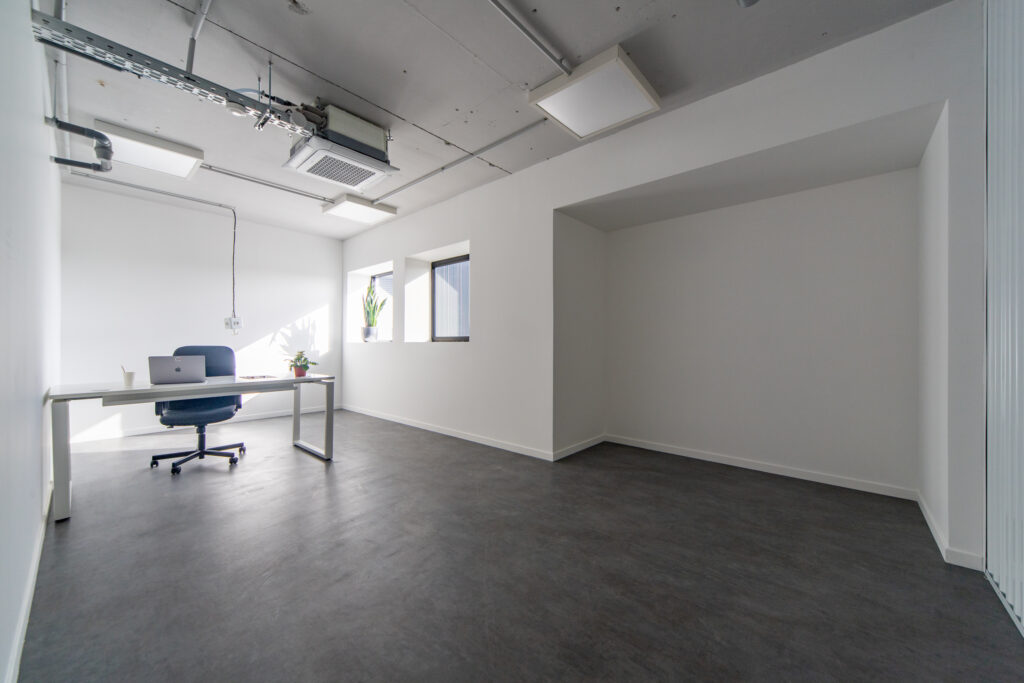
Choosing future offices is a key step in the process of moving your business.
This phase requires a methodical approach to guarantee that the new space will promote productivity, the well-being of employees, and the sustainability of your activity.
Define the selection criteria for your future offices
Before any visit or decision-making, it is essential to establish a clear checklist of priority criteria:
- Location : proximity to transport, accessibility for employees and customers, commercial or residential environment.
- Surface and configuration : size adapted to the team, flexible layout possibilities, presence of meeting rooms, common areas.
- Services and equipment : security, reception, cleaning, high-speed internet connection, parking.
- Development potential : possibility of extension, flexibility of the lease, ease of carrying out work.
- Overall cost : rent, charges, taxes, additional costs linked to installation.
« Understanding the main clauses and anticipating negotiations helps avoid unpleasant surprises: duration of the lease and renewal conditions, termination terms and transfer of the lease, distribution of costs and work between tenant and owner and verification of specific clauses linked to the use of premisesx. »
Think about accessibility and compliance
Finally, make sure that the new premises meet essential standards: accessibility for people with reduced mobility (PRM), compliance with security rules for establishments open to the public (ERP), presence of parking facilities…
Check these key points to ensure a safe, accessible and functional work environment.
3. Prepare the transfer: equipment, furniture, archives
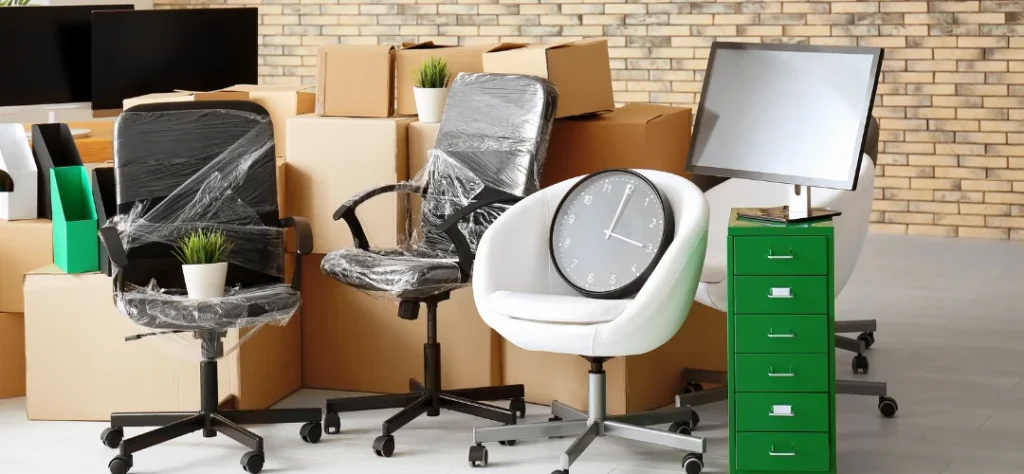
Good preparation ensures that everything is transferred in the best conditions, without loss or damage.
Sort it out: declutter, recycle, sell
Take advantage of this opportunity to reduce your inventory.
Sort equipment, furniture and archives in order to keep only the essentials, recycle or donate which is no longer useful to reduce the volume to be transported and contribute to a responsible approach. You will limit the return trips and the packaging material at the same time.
Pack office equipment efficiently
| Stage | Description | Practical advice |
|---|---|---|
| 1. Sort and group | Separate objects by categories (documents, equipment, fragile) | Makes labeling and unpacking easier |
| 2. Choose the right material | Boxes adapted to the size and weight of the objects | Small cartons for heavy, large cartons for light |
| 3. Number and label | Identify each box (contents, destination, fragility) | Use a numbering + inventory system |
| 4. Protect IT equipment | Carefully pack computers, screens, cables | Reinforced boxes, bubble wrap, unplug and store cables |
| 5. “Essential” cardboard | Gather essential equipment to get started | Important documents, chargers, office tools |
| 6. Communication | Inform the team and movers of the labeling system | Ensure understanding to avoid mistakes |
Disassemble, protect and transport the furniture
Taking apart a desk isn't just about taking out a screwdriver and hoping it falls apart on its own. Identifying sensitive elements is crucial : a solid wood tray, a designer piece of furniture or an ergonomic chair do not all support travel like a box full of pens.
Protect each item with bubble wrap, thick blankets or specialized covers (there are many variety of packaging), and above all, don’t forget tolabel each piece for reassembly — nothing worse than finding 5 extra screws without knowing where they go!
With a little method and/or a good tutorial (no need to be a professional DIYer), you guarantee a transfer without breakage and rapid reassembly. And if you feel like it's getting too technical, nothing beats the expertise of a professional to keep your furniture in perfect condition.

4. Organize the logistics of the big day
The success of the move is based on fluid coordination between internal teams, service providers and movers. From access to the building to restarting computer stations, every detail counts.
Choose a specialized moving company
If you decide to use a moving company, be aware that not all movers are created equal, especially when it comes to offices.
Opt for one specialized company in business transfer for its advantages in terms of:
✔ Technical expertise (furniture, IT, archives)
✔ Save time and reduce risks
✔ Insurance in the event of breakage or delay
✔ Additional services: labeling, temporary storage, cleaning
Organize access and parking
Nothing worse than a truck stuck in a double line or an elevator stormed by the neighbors! To avoid unpleasant surprises, consider:
- Reserve parking slotst from the town hall or building manager (at least 10 days before)
- Inform the co-ownership or the neighbors of the move if possible by mail (if possible not the day before either…)
- Provide access badges, keys or codes for movers
- Secure passage areas (tarpaulins, signage, corner protection, prohibited access)
Manage IT and network transfer
The nerve center of your operations is your information system. Poor IT transfer management can lead to costly service interruptions.
Here are the steps not to be overlooked:
- Perform a full backup data the day before transfer (cloud + physical media)
- Coordinate IT service providers for disassembly and reconnection of equipment
- Identify sensitive positions (servers, network printers, NAS, etc.)
- Test the connectivity in the new premises upstream (fiber, Wi-Fi, VPN, telephony)
- To plan the gradual restart of critical positions and services
In particular, remember to have your equipment labeled and numbered and a technician present on site for reconnection and testing.
« A transition period between moving and settling in can be facilitated through rental of a storage unit, which will act as a “buffer”, while everything is optimized. »

5. Communicate before, during and after the move
To avoid chaos and conspiracy theories around the coffee machine, a clear communication and regularity is essential. Internally and externally, it is better to say too much than not enough... as long as you say it at the right time, with the right information.
Inform and involve employees about changes
A change of address is a change of landmarks: parking spaces, canteen, coffee machine (her again). For everyone to follow, you have to inform, listen, and give meaning when moving.
For example :
- Send a clear and reassuring email
- Organize a information meeting or breakfast
- Set up a dedicated channel : intranet, Teams group, Slack…
- Create a “ moving kit » with plan, checklist, FAQ…
- Also consider designating a few referents, to streamline exchanges and channel requests.
Inform customers, partners and suppliers of your new location
It’s not because you have changed your address that your customers will follow you. An email, a call, an updated email signature... are the small gestures that avoid big failures : deliveries to the wrong place, lost mail, invoices that get lost.
Anticipate:
- Warn your customers a few weeks in advance (especially if you are closing temporarily)
- Update your email signature
- Add a temporary banner to your site or quotes
- Also check your supplier contracts to avoid any sneaky clauses in the event of a move…
Report the change of address
Ah, the administrative… The change of address must be declared everywhere, at the risk of receiving urgent letters at your old premises…and increases at your new one.
- Declaration to the registry or to the Business Formalities Center (CFE)
- Updated from the Bank, URSSAF, CPAM, INSEE, etc.
- Modification of commercial documents (invoices, quotes, brochures, website)
- Mail forwarding via La Poste, simple and always effective.
6. Settling into the new premises
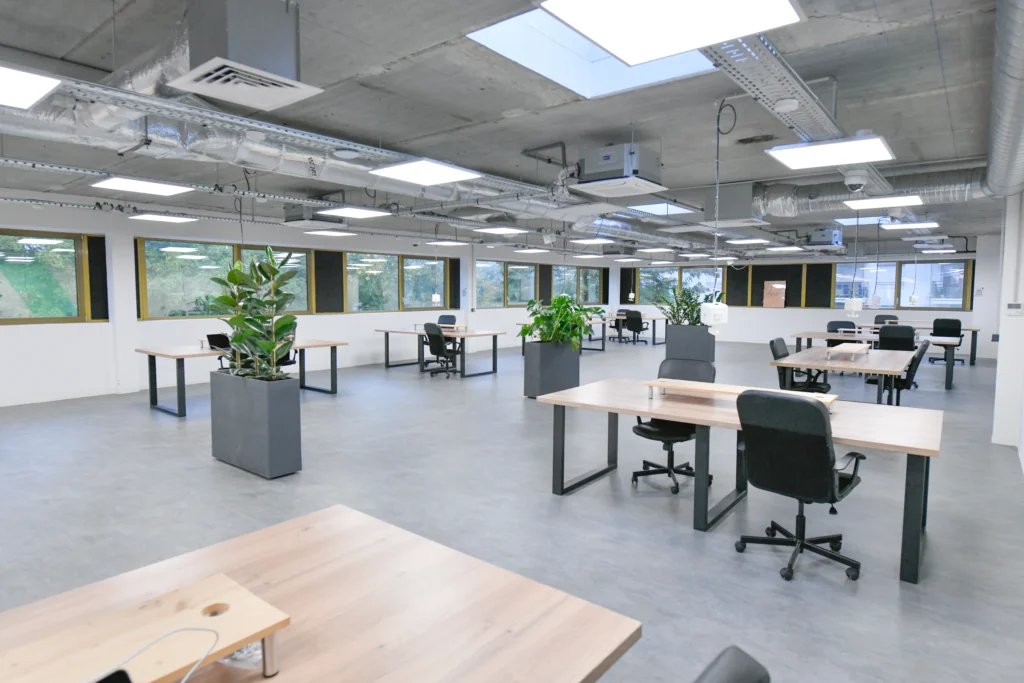
That's it, the boxes are there, the teams too, but moving in is not limited to putting a screen on a desk and crossing your fingers that the Wi-Fi works.
For the transition to be successful, the installation must be quick, fluid... and a little pleasant.
Check the facilities and equipment
Before plugging in the computers and starting the first meeting, check that everything works : electricity, heating, network, fire extinguishers, and even the coffee maker and the microwave (yes, breaks often depend on the kitchen equipment).
Below is a list of items to check following installation (or ideally even before).
| Item to check | Details | Spaces concerned |
|---|---|---|
| Electricity & lighting | Operation of sockets, switches, lighting, access to the electrical panel | Offices, meeting rooms, corridors, toilets |
| Internet & network connection | Wi-Fi stability, RJ45 socket testing, consistent coverage | Open space, offices, meeting rooms, reception |
| Heating/air conditioning | Setting, thermostat, ventilation, noise | All work and common spaces |
| Furniture installed and distributed | Assembled desks, chairs, storage, meeting furniture, relaxation area | Offices, meeting rooms, break areas |
| Security | Presence of alarms, fire extinguishers, emergency exits clear and visible | All spaces, including circulation and reception |
| Final cleaning | Floors, windows, sanitary facilities, absence of dust or construction debris | Everywhere, before the teams arrive |
| Supplies and consumables | Provision of trash cans, paper, soap, basic supplies | Offices, bathrooms, break room, printer |
Arrange work spaces
For a good layout, it is a question of think about comfort, circulation, collaboration and well-being.
A dedicated team can even work on the project in advance in consultation with all employees, which also makes it possible to take into account special needs.
To expect:
- Logical distribution of positions according to teams
- Definition of passage areas, relaxation, informal meetings
- Clear signage (reception, toilets, meeting room, etc.)
- Friendly break area (not just a wobbly table)
- A few personalization touches (frames, colors, wall logo, etc.)
« You can organize a mini “moving in assessment” on D+7 to identify the adjustments to be made in order to finalize the installation in the best conditions. »

7. Optimize relocation to boost the business
A move is a strategic opportunity. That of reinventing oneself, of adjusting one's working methods, of reconnecting, and of transform a logistical constraint into a performance driver and corporate culture.
In short, now is the perfect time to take the next step and boost your business. Some tips:
Organize a reception or a friendly moment
If this is not already done when you move in (and even if it is), organize a unifying moment : a reception, a breakfast, an official visit or a corporate housewarming party for give visibility to your business.
Involve teams in the organization. This reinforces the conviviality and appropriation of the new places, in addition to strengthening the corporate culture.
Measure the impact of the move
A successful relocation is measured. And why not take advantage of it to value actions companies, particularly in your CSR report?
| Category | Indicator | Tracking method |
|---|---|---|
| HR | Employee satisfaction | Internal survey / flash interviews |
| Organization | Productivity gain | Business KPIs, manager feedback |
| Customers/Partners | Perceived quality of service | NPS, verbatims, complaints |
| Financial | Cost optimization | Rent + charges comparison |
| Environmental | Recycled furniture, waste avoided | Volume in kg or m³ + suppliers |
| Energy | Consumption reduction | Invoices before/after |
And after?
Don’t let the breath of change fade away. Enjoy the dynamics to launch other continuous improvement projects: ergonomics, digitalization, training, new managerial rituals, etc.
« A well-executed move does not mark an end, but a new beginning. »