Self-storage, which has become a popular solution for storing personal or professional goods, is governed by a strict legislation regarding safety, technical standards and user rights. It differs significantly from classic furniture storage.
Discover in detail the rules, obligations and recommendations to guarantee an optimal storage experience that complies with regulations.
Summary
What are the principles and methods of self-storage?
Self-storage allows individuals and businesses to rent individual storage spaces for a defined or indefinite period.
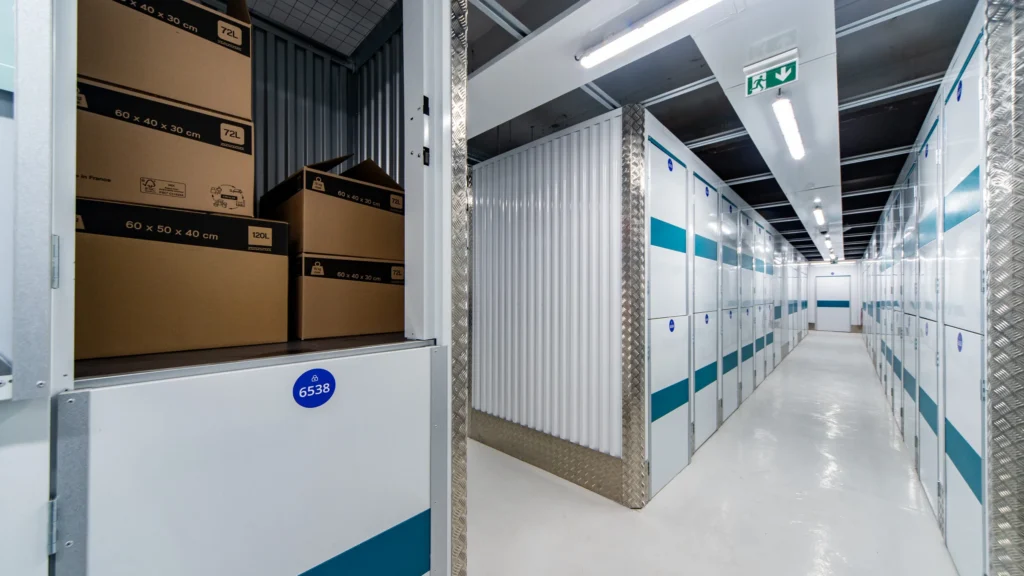
Here, in summary, are the operating principles of self-storage:
- Key principle: autonomy. Customers access their box rental freely, often via a secure 24-hour system.
- Simplified rental contract. Leases are flexible, tailored to short or long term needs.
- For whom? Ideal for individuals moving, professionals requiring storage of archives or equipment, or entrepreneurs looking for temporary space.
Example : A event company uses a self-storage unit to store trade show equipment between two events.
For more information on the subject, see this page
At Lockall, we are committed to this simplicity and do everything we can for you make the storage experience as seamless as possible.
The principle is simple: you rent a box from the size adapted to your needs for a specific period, and you have easy, free and flexible access to your storage space.
What are the legal and technical standards for self-storage centers?
Self-storage centers must comply with strict regulations on 3 main areas:
Environmental obligations : waste management, optimized energy consumption.
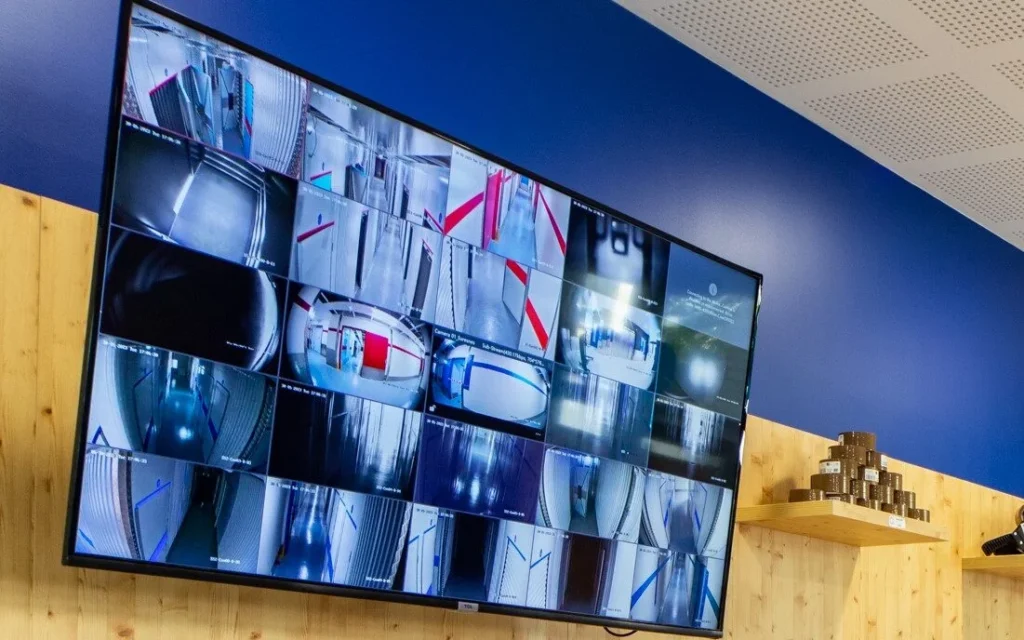
Safety standards : These standards include in particular what relates to the control system, protection system, surveillance cameras, and fire detection and fighting.
Technical standards : insulation, ventilation, and construction materials resistant to risks.

Self storage standards and certifications:
| Certification name | Criteria covered | Customer benefits |
|---|---|---|
| AFNOR (NF Service) | Safety, quality of installations, environment | Optimal security (fire risks, access control), well-maintained installations, transparent contracts, and increased confidence for individuals and professionals. |
| ISO 9001 | Quality management | Customer-oriented processes, a smooth user experience (additional services, responsiveness), and constant quality control through regular audits. |
| European standard EN 15696 | Fire safety, risk management | Requires fire safety equipment, and promotes accessible and adapted facilities (parking, elevators). |
These standards are a major asset for individuals looking for temporary storage space or for professionals managing stock or archives.
By choosing a certified center like Lockall, you benefit from proven quality of service, enhanced security and transparent management.
This guarantees the security of your property, with optimal protection against theft or fire.
What are the tenant's rights?

As a tenant of a self-storage unit, several rights are guaranteed:
- Property security : The center must provide a safe and standards-compliant environment.
- Secure access : Have free access to your property according to agreed times.
- Confidentiality : No search or inspection without your consent, except in cases of legal suspicion (prohibited objects).
- Simplified termination : Terminate the contract without unjustified penalties, according to the terms indicated.
These rights allow you to have great flexibility combined with peace of mind.
However, not everything is possible in a storage center and some restrictions apply whether on the goods stored or on the activities you can do there.
Self storage restrictions
Self-storage centers prohibit certain types of goods and activities for reasons of safety, legality and public health.
What items are prohibited?
Here is a list of items prohibited in self-storage centers
| Prohibited items | Reasons for restrictions |
|---|---|
| Dangerous/flammable products (gas, gasoline) | Risk of fire or explosion. |
| Illegal substances (drugs) | Compliance with national laws. |
| Perishable foods | Risks of pests and contamination. |
| Toxic or radioactive materials | Danger to health and the environment. |
| Live animals | Respect for animal welfare and hygiene. |
Example : A tenant wishing to store flammable paint will have to use specific storage, authorized for this type of product.
More details here
Activities prohibited in self-storage centers:
You won't be able to do everything in a self-storage center either...
| Prohibited activities | Reasons for restrictions |
|---|---|
| Live, sleep or stay in a box | Not suitable for habitation (absence of ventilation, heating, sanitary facilities). |
| Use as a shop, workshop, production location | Safety risks and non-compliance with legal zoning. |
| Use as a workspace | Unsuitable equipment and non-compliance with work standards. |
| DIY, musical rehearsals | Disturbance of other customers and non-compliance with peace and quiet rules. |
What are the safety rules?
Safety rules are strictly applied in self-storage centers:
- Regular inspection : Maintenance of installations and verification of alarms.
- Video surveillance : Cameras in continuous operation to protect the premises.
- Access control : Magnetic badge or personalized code to limit intrusions.
- Fire prevention : Smoke detectors, accessible fire extinguishers, smoking-free areas.
Individual insurance remains necessary for box rental
Although self-storage centers implement security measures (cameras, alarms), minimal coverage is often not enough to guarantee the total protection of your belongings, especially if they are valuable or fragile.
Subscribe to insurance for self-storage is essential to protect your assets against various risks, such as flight, THE accidental damage or the claims (fires, floods).
By taking out insurance, you obtain peace of mind, knowing that your assets are protected against unforeseen events.
Regulatory differences with furniture storage
Self-storage centers and storage centers differ in several aspects, particularly in terms of regulations and flexibility.
Table: Comparison between self-storage and self-storage
| Appearance | Self-storage | Furniture storage |
|---|---|---|
| Access | Autonomous, often 24 hours a day | By appointment |
| CONTRACT | Flexible, cancellable at short notice | Often longer commitment |
| Security | Access control, video surveillance | Centralized monitoring |
| Cost | Lesser, monthly payment | Often higher, lump sum overall cost |
| Regulation | Standards specific to individual storage | General regulation of warehouses |
Furniture storage is therefore subject to regulations which have been initially designed for industrial warehousing needs, in volume and in shared areas. The regulations governing self-storage spaces such as box rentals are therefore more adapted to the flexibility and customization needs of individuals and businesses.
How to choose a self-storage center?

To select the center that meets your needs, consider:
- Additional services : Insurance included, loading assistance, packing supplies.
- Location : Close to your home or workplace.
- Security systems : Check for cameras, alarms and access controls.
- Standards and certifications : Choose certified centers (AFNOR, NF Service).
- Available options : 24-hour access, varied box sizes, air conditioning for sensitive objects.
Example : For an online clothing business, a center offering well-ventilated boxes would be ideal.
At the house of Lockall, we are committed to providing you with self-storage solution secure and reliable, with tailor-made insurance to meet your expectations. By choosing our services, you not only benefit from optimal storage conditions but also peace of mind, knowing that your assets are protected in certified and secure spaces.
Opt for Lockall and enjoy the benefits of flexible, secure and fully covered storage for worry-free management of your belongings, whether personal or professional.